Websites and stores built for US buyers and US rules
United States
Delivered remotely from Islamabad, Pakistan
Selling online to American customers
The Census Bureau estimates that e-commerce made up 17.1 percent of US retail sales in the second quarter of 2026, with online sales up 3.8 percent on the previous quarter. Selling across state lines brings checkout, tax, and disclosure details that have to be right before launch, not fixed after the first complaint.
Payments are card-led. Credit and debit cards accounted for two-thirds of consumer payments in the Federal Reserve's 2026 Diary of Consumer Payment Choice, and the CFPB reports that buy now, pay later, typically a four-payment loan with no interest, kept expanding through 2023. We design the checkout around the payment gateway you choose, then test the card form, wallet buttons, and any installment option on phones before launch.
Tax needs planning, not a plugin added at the end. Since the Supreme Court's 2018 Wayfair decision, states can require out-of-state sellers to collect sales tax without a physical presence, and the GAO describes the result as a complex patchwork of requirements, with thresholds that vary from state to state. There is no national e-invoicing mandate to build for, so the work sits at checkout: tax calculated from the delivery address for the states your accountant confirms, and shown clearly with shipping before payment.
Claims and subscriptions need the same care. The FTC applies its Made in USA standard to online marketing, and an unqualified Made in USA label on a product that is not all or virtually all made in the US can bring civil penalties, online included. California's automatic renewal law amendments, in effect since July 1, 2025, require express affirmative consent and let customers who signed up online cancel online. The storefront we rebuilt for The Closet, a fashion retailer in Qatar, dealt with a problem US apparel brands also face: a broad catalog that has to stay easy to browse and buy from on a phone.
Accessibility is a legal question in the US
The Department of Justice's position is that the ADA covers the goods and services that businesses open to the public offer on the web. It has no regulation setting detailed technical standards for those businesses, and its guidance points to WCAG as a helpful reference. State and local governments now have a specific rule, WCAG 2.1 Level AA, with compliance dates in April 2027 and April 2028. It also covers content others provide for them, which matters if you build websites or apps for public bodies.
Private litigation keeps the issue live. Seyfarth Shaw counted 3,117 federal website accessibility lawsuits in 2025, 27 percent more than in 2024, with New York, Florida, and Illinois the busiest states. A widget is not a shortcut: in 2025 the FTC ordered accessiBe to pay $1 million over claims that its accessWidget plug-in could make any website WCAG-compliant.
We treat WCAG 2.1 AA as a design and build requirement: semantic markup, full keyboard operation, visible focus, contrast checked in the design system, labeled form fields with clear errors, and alternative text planned with the content. Before launch we run automated and manual checks and hand over a written list of anything outstanding. No agency can promise you will never receive a demand letter. We can show how the site was built against WCAG, the standard DOJ guidance points to.
Privacy law is set state by state
The US has no comprehensive federal privacy law. Twenty states had comprehensive consumer privacy laws on the books in early 2026, and Louisiana, Oklahoma, Alabama, and Vermont have since passed laws that take effect in 2027 and 2028. Thresholds differ. California's CCPA covers for-profit businesses doing business in California that have gross annual revenue of $26.625 million or more, that buy, sell, or share the personal information of 100,000 or more California residents or households, or that earn half their revenue from selling or sharing it.
Where a law applies, much of the obligation shows up on the website. California requires a clear opt-out link, labeled "Do Not Sell or Share My Personal Information" or an approved alternative such as "Your Privacy Choices", and requires businesses to honor opt-out preference signals such as Global Privacy Control. Before launch we list every tag and pixel on the site, configure the consent tool so a GPC signal actually stops the tags it should, and cut forms down to the fields you use. Your lawyer decides which laws apply and writes the policy; we make the site behave the way the policy says.
Marketing rules reach the site as well. CAN-SPAM requires commercial email to carry a valid postal address and an opt-out honored within 10 business days, which shapes email templates and the unsubscribe flow. The FTC's 2024 rule on fake reviews and testimonials bans reviews attributed to people who do not exist, including AI-generated fakes, and certain insider reviews that do not disclose the reviewer's connection to the business, and it allows civil penalties against knowing violators. Review sections we build show genuine customer reviews only, which is also why this page shows project work rather than client quotes.
How the work runs from Islamabad
Islamabad is on UTC+5 all year, so the gap to the US moves only when American clocks change, on March 8 and November 1 in 2026. During daylight time a 9 a.m. call in New York is 6 p.m. in Islamabad, and 9 a.m. in Los Angeles is 9 p.m. Review sessions go in your morning. Between calls, decisions, open questions, and the next deliverable are written down in one place. Feedback sent by the end of your day reaches the team at the start of the Islamabad working day, hours before your next morning.
Copy, forms, dates, and units are set for US English. Spanish is by far the most common language other than English spoken in US homes, according to the Census Bureau, so for many consumer brands a second language is a real decision. We already deliver multilingual sites, including right-to-left Arabic builds, and can plan a Spanish version into the structure from the start: its own URLs, hreflang tags, and a switcher that keeps visitors on the matching page. The Spanish copy should come from a fluent translator you approve.
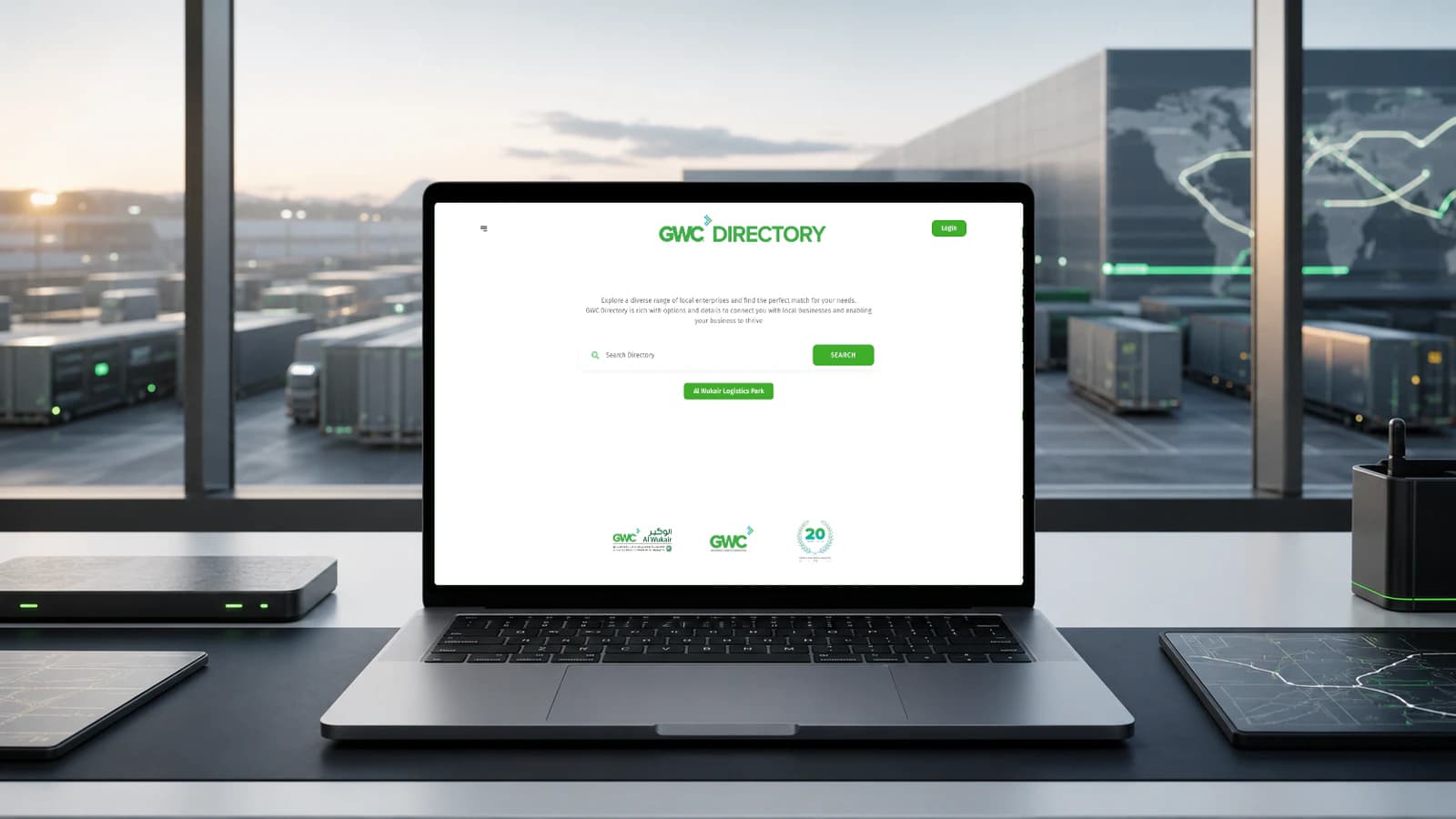
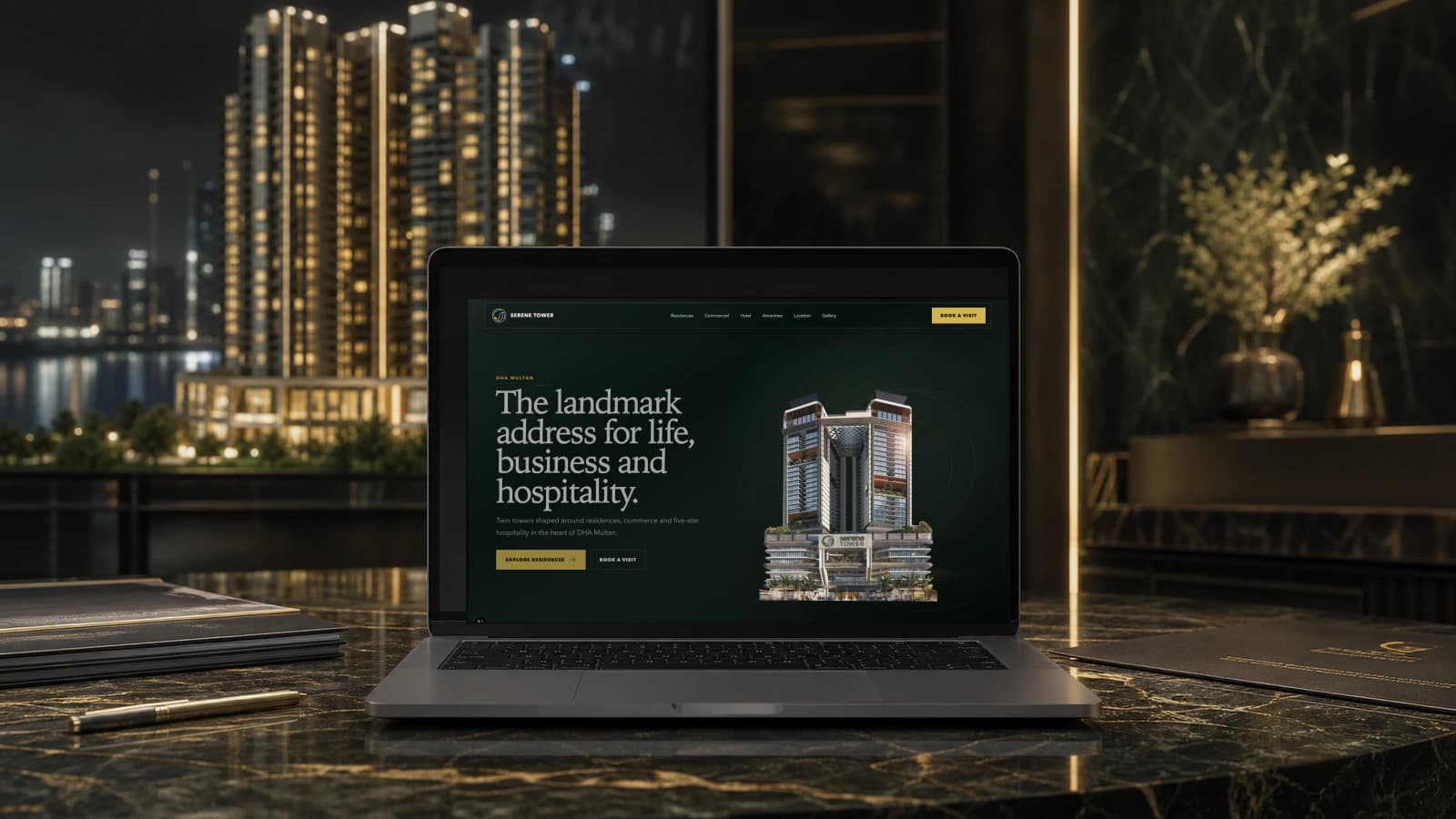
We do not present any of our portfolio as US client work. The closest evidence is The Closet's storefront, the GWC Directory logistics platform, and the BEAT fitness site, all for clients in Qatar; launch websites for Pakistani property developers, including Serene Tower in DHA Multan; and corporate technology and architecture sites. Packages are priced in US dollars, starting at USD 1,490, and we will walk you through exactly what we did on any project you want to discuss.
Islamabad to the United States
11,370 km from our team, measured to Washington, DC.
Working across time zones.
Calls and review sessions are scheduled in US working hours, usually your morning, which falls in the Islamabad evening.
Islamabad is UTC+5 with no daylight saving, so only US clock changes move the gap. During US daylight time (March 8 to November 1, 2026, and again from March 14, 2027), Islamabad is 9 hours ahead of New York (EDT, UTC-4), 10 ahead of Chicago (CDT, UTC-5), 11 ahead of Denver (MDT, UTC-6), and 12 ahead of Los Angeles (PDT, UTC-7). During standard time (November 1, 2026 to March 14, 2027) the gaps are 10 hours (EST, UTC-5), 11 hours (CST, UTC-6), 12 hours (MST, UTC-7), and 13 hours (PST, UTC-8). Most of Arizona stays on MST all year, 12 hours behind Islamabad. In practice: 9 a.m. to 12 p.m. Eastern is 6 to 9 p.m. in Islamabad in summer and 7 to 10 p.m. in winter; 8 to 11 a.m. Central is 6 to 9 p.m. (summer) or 7 to 10 p.m. (winter); 8 to 10 a.m. Mountain is 7 to 9 p.m. or 8 to 10 p.m.; 8 to 10 a.m. Pacific is 8 to 10 p.m. or 9 to 11 p.m. Feedback sent at 5 p.m. Eastern arrives at 2 a.m. Islamabad time in summer (3 a.m. in winter), ready for the next Islamabad morning.
What a build in the US needs.
ADA accessibility, built to WCAG 2.1 AA
The DOJ applies the ADA to what businesses open to the public offer online and points to WCAG as guidance, and Seyfarth Shaw counted 3,117 federal website accessibility lawsuits in 2025. Xsofty designs and builds to WCAG 2.1 AA, checks keyboard use, focus, contrast, forms, and alt text before launch, hands over a written list of known issues, and does not rely on overlay widgets.
State privacy laws and opt-out signals
With no federal privacy law, twenty state laws on the books in early 2026 and four more passed since, a US site needs a tag inventory, a consent tool that honors Global Privacy Control, and, where California's CCPA applies and you sell or share data, a "Do Not Sell or Share My Personal Information" link or an approved alternative. Xsofty sets these up to match the policy your counsel approves and keeps forms to the fields you actually use.
Sales tax at checkout
Since Wayfair, states can require out-of-state sellers to collect sales tax, with thresholds that vary by state, and there is no mandatory B2B e-invoicing. Xsofty configures destination-based tax calculation in the store for the states your accountant confirms, and makes tax and shipping clear before payment.
Reviews, product claims, and subscriptions
The FTC bans fake reviews, including AI-generated ones, applies its Made in USA standard online, and requires the total price up front for live-event tickets and short-term lodging. California requires express affirmative consent for auto-renewing subscriptions and online cancellation for those sold online. Xsofty builds review displays from genuine sources, explicit consent steps at sign-up, and a cancellation path in the account area.
US English, with Spanish when it earns its place
Copy, spelling, date formats, and units are set for US readers. Where Spanish-speaking customers matter, Xsofty builds the second language into the structure with separate URLs, hreflang, and a page-matched language switcher, the same multilingual approach used for its Arabic sites; translation comes from a fluent translator you approve.
What Xsofty can build for US clients.
Web Design & Development
High-performance websites shaped around your brand, your audience, and the outcomes that matter.
- Strategy
- Next.js
- CMS
E-Commerce Development
Fast, frictionless storefronts that turn discovery into purchase across every screen.
- Shopify
- WooCommerce
- Conversion
Custom Web Apps & AI Integrations
Purpose-built platforms and useful AI workflows that remove friction from complex operations.
- Web apps
- Automation
- AI
SaaS & Product Development
Multi-tenant web products with subscriptions, roles, billing, and the dashboards customers use every day.
- Multi-tenant
- Subscriptions
- Dashboards
Mobile App Development
iOS and Android apps built alongside the web app and API behind them, so every screen works from the same data.
- iOS
- Android
- APIs
SEO & Digital Growth
Search foundations, content direction, and measurable improvements designed to compound over time.
- Technical SEO
- Content
- Analytics
Website Maintenance & Care Plans
Proactive updates, monitoring, and support that keep your digital presence secure and performing.
- Support
- Security
- Performance
Who we build for in the US.
Direct-to-consumer and e-commerce brands
A mobile-first Shopify or WooCommerce storefront, a checkout tested with your payment gateway, sales tax configured by destination, and product claims and reviews that hold up to FTC rules.
SaaS and technology companies
A marketing site that explains a technical product to non-technical buyers, clear pricing and security pages, demo or trial flows connected to your CRM, and consent controls that match your privacy policy.
Professional services firms
Service pages that say exactly what you do and for whom, accessible intake forms that ask only for what you need, and a CMS your team can update without a developer.
Architecture, design-build, and real estate
Image-led project and property pages that load quickly on phones, structured project data, accessible galleries, and enquiries routed to the right person.
Logistics, B2B platforms, and directories
Searchable listings with useful filters, supplier or member profiles, admin tools for moderation, and an information structure that stays usable as the directory grows.
Relevant work
Xsofty does not present any portfolio project as US client work; the closest evidence is a fashion storefront and a logistics directory platform for clients in Qatar, launch sites for Pakistani property developers, and technology and architecture websites.



Questions from US clients.
No. Xsofty is a web design and development agency based in Islamabad, Pakistan, founded in 2019. We work with US businesses remotely, with calls and review sessions in your working hours and written updates between them.
Cities we work with in the US
Further reading
- Hiring an Islamabad web agency from the UK or US
Prices in USD, call hours for your time zone, and the contracts, VAT and tax forms UK and US clients ask about.
Sources for this page (21)
- E-commerce was 17.1 percent of total US retail sales in Q2 2026 ($340.2 billion, seasonally adjusted), up 3.8 percent from Q1 2026 census.gov (opens in a new tab)
- Credit and debit cards accounted for two-thirds of all consumer payments (2026 Diary of Consumer Payment Choice, published May 11, 2026) frbservices.org (opens in a new tab)
- BNPL is typically a four-payment, no-interest loan for retail purchases, and the market continued to expand between 2019 and 2023 consumerfinance.gov (opens in a new tab)
- Wayfair (2018) let states require out-of-state sellers to collect sales tax without physical presence, producing a complex patchwork of requirements with varying economic thresholds gao.gov (opens in a new tab)
- E-invoicing is not mandatory for B2B transactions in the US; B2G is voluntary unless an agency requires it basware.com (opens in a new tab)
- FTC Made in USA standard covers online marketing; under the 2021 Labeling Rule, unqualified Made in USA labels on products not all or virtually all made in the US can bring civil penalties, including online ftc.gov (opens in a new tab)
- California automatic renewal law amendments took effect July 1, 2025: express affirmative consent, online cancellation for online enrollments, annual reminders cooley.com (opens in a new tab)
- FTC Rule on Unfair or Deceptive Fees (effective May 12, 2025) requires upfront total pricing for live-event tickets and short-term lodging; taxes and shipping may be disclosed separately before payment ftc.gov (opens in a new tab)
- DOJ: ADA requirements apply to goods and services public accommodations offer on the web; no regulation setting detailed standards; WCAG cited as helpful guidance ada.gov (opens in a new tab)
- Title II rule adopts WCAG 2.1 Level AA for state and local governments, covers content provided through arrangements with others, and (after the April 2026 interim final rule) has compliance dates of April 26, 2027 and April 26, 2028 ada.gov (opens in a new tab)
- 3,117 federal website accessibility lawsuits in 2025, up 27 percent from 2,452 in 2024; New York, Florida, Illinois lead (Seyfarth Shaw) mondaq.com (opens in a new tab)
- FTC final order (April 2025) requiring accessiBe to pay $1 million over claims its accessWidget plug-in could make any website WCAG-compliant ftc.gov (opens in a new tab)
- As of 2026 the US has no comprehensive federal consumer data privacy law; twenty states have enacted comprehensive privacy laws clym.io (opens in a new tab)
- Twenty states have comprehensive privacy laws on the books as of February 2026 multistate.us (opens in a new tab)
- Louisiana and Oklahoma (Jan 1, 2027), Alabama (May 1, 2027), and Vermont (Jan 1, 2028) passed new comprehensive privacy laws venable.com (opens in a new tab)
- CCPA thresholds ($26.625M revenue, 100,000 California residents or households, 50% of revenue from selling/sharing), opt-out link labels, and honoring opt-out preference signals such as Global Privacy Control cppa.ca.gov (opens in a new tab)
- CAN-SPAM requires a valid physical postal address and opt-out requests honored within 10 business days ftc.gov (opens in a new tab)
- FTC 2024 final rule bans fake reviews by nonexistent people such as AI-generated fakes, certain undisclosed insider reviews, and allows civil penalties against knowing violators ftc.gov (opens in a new tab)
- US daylight saving time runs from the second Sunday of March to the first Sunday of November (March 8 and November 1 in 2026; March 14 in 2027) law.cornell.edu (opens in a new tab)
- Arizona (except the Navajo Nation) and Hawaii do not observe daylight saving time; 2026 DST runs March 8 to November 1 nist.gov (opens in a new tab)
- Among US residents who speak a language other than English at home, 61.1 percent speak Spanish (2018-2022 ACS) census.gov (opens in a new tab)