Bilingual websites for Miami businesses

Miami
Delivered remotely from Islamabad, Pakistan
One site, read in two or three languages
Roughly two in three Miami-Dade residents speak Spanish at home, and more than half were born outside the United States, according to the Beacon Council's county profile. Visitors widen the range: Colombia and Brazil were the top two international source markets for Greater Miami in 2025. For most businesses here a Spanish version belongs in the first brief, and Portuguese is worth discussing if you sell to Brazilian buyers or guests.
A toggle that swaps text with a script does not hold up. We give each language its own URLs, link them with hreflang, and let visitors pick a language instead of redirecting them by browser setting, which is what Google's multilingual guidance recommends. The same care continues past the page: form labels, error messages, confirmation emails and follow-up texts should arrive in the language the person chose.
Two practical notes. FTC rules require that when advertising or sales material runs in a language other than English, the required disclosures appear in that language, so a Spanish landing page needs its disclosures in Spanish, not in English fine print. And we build the language structure, not your voice: Spanish copy should be written or reviewed by a native speaker on your team or a translator you trust. Our multilingual work includes Arabic right-to-left builds, so layouts that survive a change of language are part of how we plan every template.
Condos, visitors and freight shape most briefs
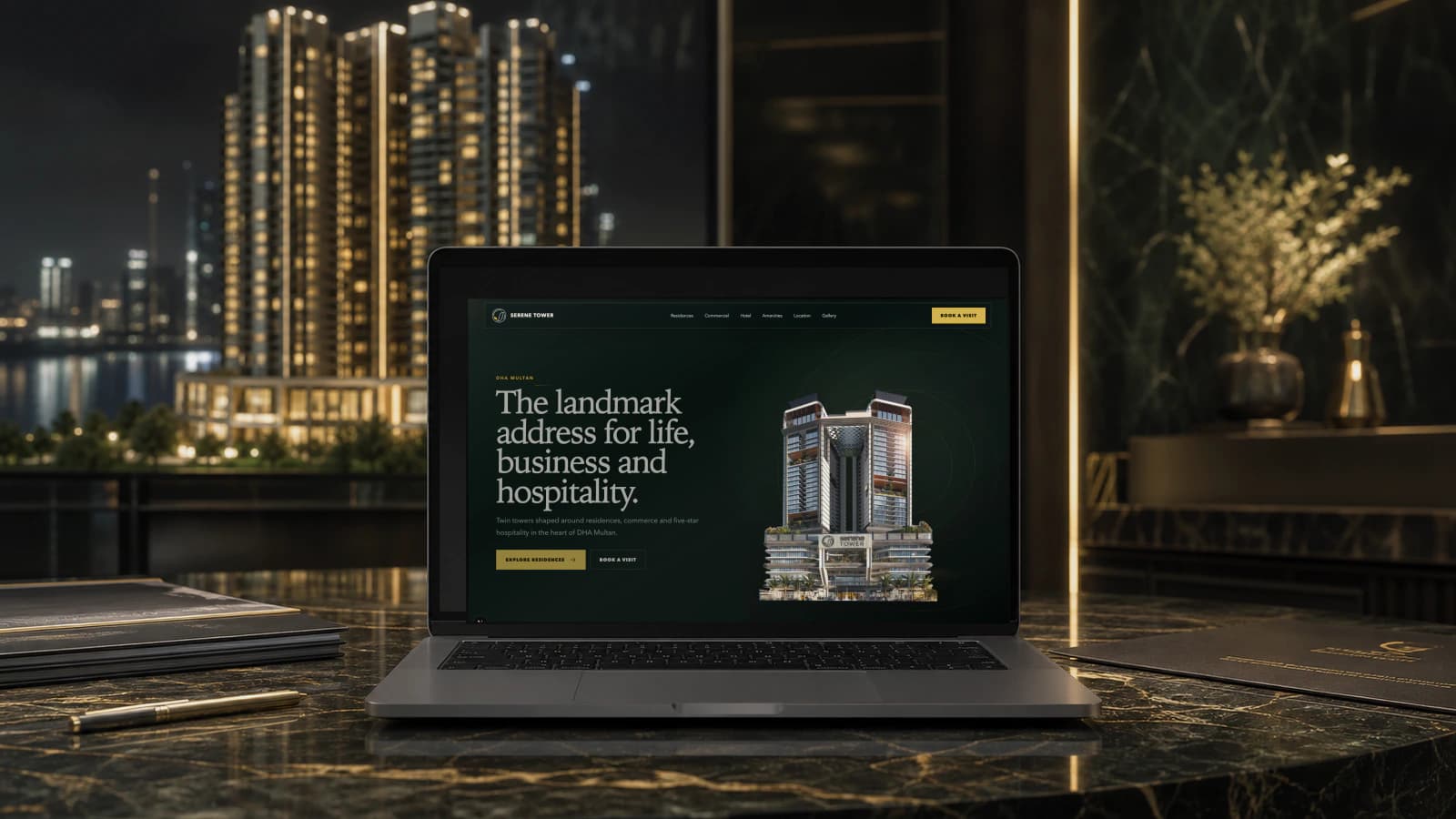
Construction employs more Miami residents than any industry except health care, according to Data USA's 2024 figures. Developers selling new residential projects need what our real estate launch sites in Pakistan were built around: architecture that reads well on a phone, unit and amenity detail that is quick to scan, construction progress, and a short path to an enquiry. Where a licensed brokerage handles sales, Florida's advertising rules require the brokerage's licensed name to appear above, below or next to the contact details on the website, so we put it in the template instead of leaving it to each page.
Existing buildings have a newer obligation. Since January 1, 2026, Florida condominium associations with 25 or more units must post a defined set of official records on a website or app, inside a protected area that only unit owners and association employees can reach. A 2025 amendment, HB 913, added the past 12 months of meeting minutes and recordings, with updates due within 30 days. That is a small web application with logins, document permissions and room for video files, and we scope it as one rather than as a brochure site.
Hospitality is the second pattern. Greater Miami received 28.3 million visitors in 2025, and hotels, vacation rentals and ticket sellers are covered by the FTC's fee rule, in force since May 12, 2025, which requires the total price, including mandatory fees, to be shown upfront. Booking and ticket flows should be designed around that all-in figure from the first screen.
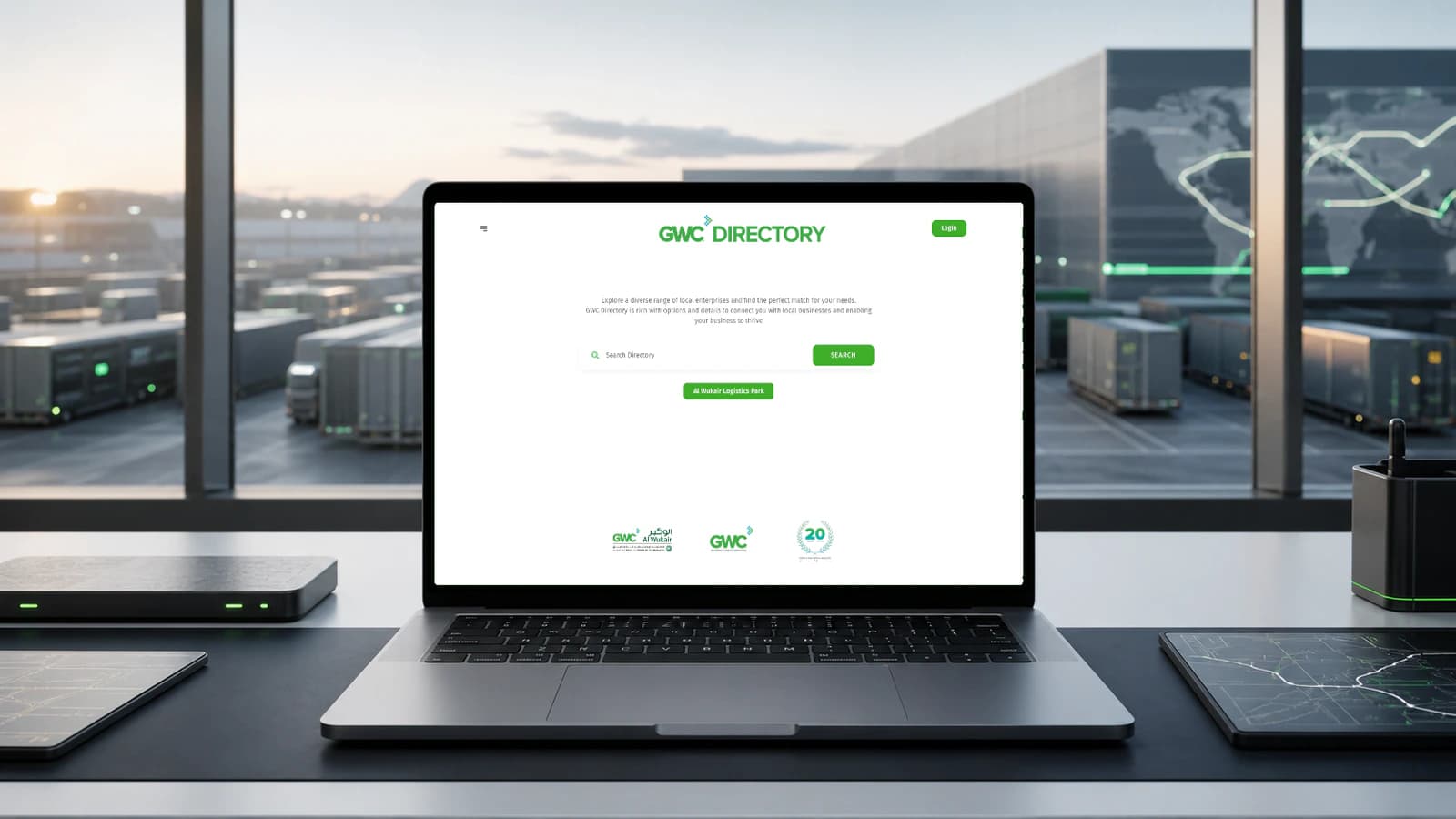
Trade is the third. The Beacon Council describes Miami International Airport as the busiest US airport for international freight, says about a third of US exports to Latin America and the Caribbean move through Miami, and counts around 1,200 multinationals running Latin American headquarters in the county. Forwarders, distributors and regional offices usually need searchable directories, quote requests and bilingual service pages more than visual flourish. Our GWC Directory platform for a Qatar logistics client is the closest example.
Federal and Florida rules that reach the front end
The Department of Justice says the ADA applies to goods and services businesses offer on the web, and points to WCAG as practical guidance. UsableNet's 2025 year-end report found Florida had returned as a high-volume state for digital accessibility lawsuits, that e-commerce accounted for 70 percent of cases, and that accessibility widgets did not slow filings. We treat accessibility as build work: semantic markup, keyboard paths, contrast, labelled forms and captions, checked against WCAG before launch rather than patched with a plug-in afterwards.
Tracking scripts carry their own exposure. Florida's Security of Communications Act is a wiretap statute, and in March 2025 a federal court in Florida let a claim over website tracking pixels proceed, distinguishing it from session replay claims that earlier courts had rejected. Before launch we list every third-party script, pixel and chat widget, load them only under the consent approach your counsel approves, and remove what nobody uses.
Most of the Florida Digital Bill of Rights applies only to companies with more than $1 billion in global revenue that also meet narrow tests, so most Miami businesses sit outside its main duties. One part reaches businesses of any size: selling sensitive personal data needs the consumer's consent and a notice in the privacy policy. The state breach law also applies whatever your size: online account logins count as personal information, and affected customers must be notified within 30 days. If your forms feed automated marketing texts, Florida's Telephone Solicitation Act expects prior express written consent, and the amended law accepts a box the visitor ticks as the signature. For online stores, Florida sales tax is destination-based, and remote sellers with more than $100,000 in taxable Florida sales in the previous calendar year must collect it, so we test checkout tax against Miami-Dade and out-of-county addresses. Your counsel sets the policy; we build it into the site.
Nine or ten hours ahead of Miami
Xsofty is based in Islamabad and works with Miami businesses remotely; we have no office in Florida. Islamabad does not change its clocks, so the gap moves with US daylight saving: nine hours from the second Sunday in March to the first Sunday in November, ten hours in winter. We hold calls and design reviews in your morning, which is our evening, and build during Islamabad's working day, which is Miami's night. Feedback sent on a Miami afternoon can be in progress before your next morning.
The proof we can show is by industry rather than by city: real estate launch and developer websites for clients in Pakistan, and a fashion storefront and a logistics directory for clients in Qatar. We also deliver Arabic right-to-left sites. Packages start at USD 1,490 for Launch, USD 2,950 for Growth and USD 4,900 for Commerce; an owner portal or trade platform is priced by proposal. Care plans are USD 39, 79 or 149 a month.
Islamabad to Miami
12,830 km from our team in Islamabad.
Working across time zones.
Calls and reviews sit in the Miami morning, which is Islamabad's evening, and build work happens during Islamabad's day while Miami is off the clock.
Islamabad is UTC+5 all year with no daylight saving. Miami is on US Eastern Time, which moves: EDT (UTC-4) from 2:00 a.m. on Sunday 8 March 2026 to 2:00 a.m. on Sunday 1 November 2026, when Islamabad is 9 hours ahead; EST (UTC-5) from 1 November 2026 to 14 March 2027, when Islamabad is 10 hours ahead. In summer, 8:00-12:00 in Miami is 17:00-21:00 in Islamabad (9:00 a.m. Miami = 6:00 p.m. Islamabad). In winter the same Miami hours are 18:00-22:00 in Islamabad (9:00 a.m. Miami = 7:00 p.m. Islamabad). The Islamabad working day of 9:00-18:00 runs from midnight to 9:00 a.m. Miami time in summer and from 11:00 p.m. to 8:00 a.m. Miami time in winter, so feedback given on a Miami afternoon can be worked on before the next Miami morning.
What a build in Miami needs.
English and Spanish as separate, linked pages
Each language gets its own URLs, hreflang annotations and a visible language switcher instead of an automatic redirect, following Google's guidance for multilingual sites. Forms, error messages, confirmation emails and texts follow the visitor's chosen language, and required disclosures appear in the language of the ad or sales page, as 16 CFR 14.9 requires. Spanish or Portuguese copy comes from a native writer or translator you choose; we build the structure and the workflow for keeping it in sync.
ADA accessibility built into the code
DOJ guidance applies the ADA to what businesses offer online and points to WCAG. With Florida back among the high-volume states for digital accessibility suits, we build semantic structure, keyboard access, contrast, labelled forms and captions into templates and check them against WCAG before launch. We do not rely on accessibility widgets, which UsableNet found did not slow lawsuits in 2025. No one can promise a site will never draw a claim; accessible code kept up after launch is what reduces the risk.
Consent for tracking, chat and marketing texts
Florida's Security of Communications Act has been used against website tracking pixels, and the Florida Telephone Solicitation Act expects prior express written consent for automated marketing texts. We inventory every third-party script, pixel and chat tool, load them only under the consent approach your counsel approves, and add an SMS consent checkbox the visitor ticks themselves, using wording your counsel supplies.
Breach readiness for forms and logins
Most Miami businesses fall below the main Florida Digital Bill of Rights thresholds, though its rule on selling sensitive personal data applies at any size. The state breach law treats online account usernames or emails with passwords as personal information and sets a 30-day deadline to notify affected people. We limit what forms collect, keep admin access tight, and document where each form's data goes so you know what to check if something goes wrong.
Checkout tax and all-in pricing
Florida sales tax is destination-based, and remote sellers with more than $100,000 in taxable Florida sales in the previous calendar year must collect it, so store tax settings are tested against Miami-Dade and out-of-county addresses before launch. Hotels, vacation rentals and ticket sellers need total prices including mandatory fees shown upfront under the FTC fee rule, so booking flows are designed around the all-in figure.
What Xsofty can build for Miami clients.
Web Design & Development
High-performance websites shaped around your brand, your audience, and the outcomes that matter.
- Strategy
- Next.js
- CMS
E-Commerce Development
Fast, frictionless storefronts that turn discovery into purchase across every screen.
- Shopify
- WooCommerce
- Conversion
Custom Web Apps & AI Integrations
Purpose-built platforms and useful AI workflows that remove friction from complex operations.
- Web apps
- Automation
- AI
SEO & Digital Growth
Search foundations, content direction, and measurable improvements designed to compound over time.
- Technical SEO
- Content
- Analytics
Website Maintenance & Care Plans
Proactive updates, monitoring, and support that keep your digital presence secure and performing.
- Support
- Security
- Performance
Who we build for in Miami.
Residential development and brokerage
Launch sites that carry architecture, units, amenities and construction progress well on a phone, bilingual enquiry forms, and the brokerage's licensed name placed with the contact details as Florida advertising rules require.
Condominium associations and managers
An owner portal with logins and role-based access for the official records, meeting minutes and recordings Florida now requires associations with 25 or more units to post, kept separate from the public website.
Hotels, vacation rentals and events
Booking and ticket flows that show the all-in price from the first screen, with Spanish and Portuguese versions for guests from Colombia, Brazil and the rest of Latin America.
Trade, logistics and regional headquarters
Searchable directories, quote-request flows and English, Spanish and Portuguese service pages for buyers across Latin America and the Caribbean.
Fashion and retail e-commerce
Mobile-first storefronts with accessible product pages and checkout, card payments as the default since cards make up about two thirds of US consumer payments, and Florida sales tax configured by delivery address.
Health and professional services
Bilingual service pages and accessible appointment or intake forms, with third-party tracking kept off sensitive pages given Florida's pixel litigation.
Relevant work
The relevant proof is by industry, not by city: real estate launch and developer websites for clients in Pakistan, plus a fashion storefront and a logistics directory for clients in Qatar. We do not present any of it as Miami work.



Questions from Miami clients.
No. Xsofty is based in Islamabad, Pakistan, and works with Miami businesses remotely. Calls and design reviews are scheduled in Miami working hours, and decisions are written up after each one so nothing is lost across the time difference.
More in United States
Sources for this page (24)
- About 66% of Miami-Dade residents speak Spanish at home; 54% were born outside the United States; Hispanic or Latino residents are 69.1% of the county beaconcouncil.com (opens in a new tab)
- Greater Miami recorded 28.3 million visitors in 2025; Colombia and Brazil led international visitation, followed by the UK, Canada and Mexico prnewswire.com (opens in a new tab)
- Miami International Airport is the busiest US airport for international freight; about one-third of US exports to Latin America and the Caribbean move through Miami beaconcouncil.com (opens in a new tab)
- 1,200 multinational companies have Latin American headquarters in Miami-Dade County beaconcouncil.com (opens in a new tab)
- Miami-Dade target industries include finance, technology, life sciences and healthcare, trade and logistics, plus hospitality and tourism; construction and retail are named among other thriving industries beaconcouncil.com (opens in a new tab)
- In 2024 the largest industries by employment for Miami residents were health care and social assistance (28,259), then construction (27,178) datausa.io (opens in a new tab)
- Google recommends separate URLs per language, hreflang annotations, and avoiding automatic redirects based on perceived language developers.google.com (opens in a new tab)
- When advertising or sales material is in a language other than English, required disclosures must appear in that language law.cornell.edu (opens in a new tab)
- Florida real estate advertising on websites must show the licensed brokerage name above, below or adjacent to the point of contact information (Rule 61J2-10.025(3)(a)) floridarealtors.org (opens in a new tab)
- HB 1021 extended the condominium website requirement to associations with 25 or more units, with a compliance deadline of January 1, 2026; records may be provided through a mobile app floridacondohoalawblog.com (opens in a new tab)
- Condo association websites must include a protected location inaccessible to the public and accessible only to unit owners and association employees ksnlaw.com (opens in a new tab)
- HB 913 (2025) requires associations with 25 or more units to post the past 12 months of meeting minutes and recordings online, with updates within 30 days ksnlaw.com (opens in a new tab)
- The FTC Rule on Unfair or Deceptive Fees took effect May 12, 2025 and requires upfront total prices for live-event tickets and short-term lodging, including hotels and vacation rentals ftc.gov (opens in a new tab)
- DOJ states ADA requirements apply to goods and services offered by public accommodations on the web and points to WCAG ada.gov (opens in a new tab)
- In 2025 Florida returned as a high-volume jurisdiction for digital accessibility lawsuits; e-commerce accounted for 70% of cases; accessibility widgets did not slow litigation info.usablenet.com (opens in a new tab)
- In W.W. v. Orlando Health (March 6, 2025) the Middle District of Florida allowed an FSCA claim over website tracking pixels to proceed, distinguishing previously rejected session replay claims sidley.com (opens in a new tab)
- The Florida Digital Bill of Rights' controller obligations apply only to entities with over $1 billion in global revenue that meet one of three further tests; effective July 1, 2024 burr.com (opens in a new tab)
- The FDBR's sensitive-data sale provision applies to any for-profit business in Florida that collects residents' personal data, regardless of revenue: consent before sale and a disclosure in the privacy notice truevault.com (opens in a new tab)
- Florida's breach law covers usernames or emails with passwords, requires notice to individuals within 30 days, and notice to the Attorney General for breaches affecting 500 or more residents dwt.com (opens in a new tab)
- The amended Florida Telephone Solicitation Act requires prior express written consent for unsolicited automated telephonic sales calls and texts; checking a box indicating consent counts as a signature; 15-day window after STOP goodwinlaw.com (opens in a new tab)
- Florida sales tax is destination-based; Miami-Dade combined rate is 7%; remote sellers must collect once Florida retail sales exceed $100,000 in the previous calendar year xero.com (opens in a new tab)
- Florida's economic nexus threshold of $100,000 in taxable remote sales in the previous calendar year took effect July 1, 2021 salestaxinstitute.com (opens in a new tab)
- In the Fed's October 2025 Diary of Consumer Payment Choice (2026 Findings), consumers made about 47 payments a month, 16 by credit card and 15 by debit card; cards were two-thirds of all payments frbservices.org (opens in a new tab)
- US daylight saving time begins at 2:00 a.m. on the second Sunday of March and ends at 2:00 a.m. on the first Sunday of November (8 March and 1 November in 2026) nist.gov (opens in a new tab)