Websites for Riyadh, Arabic-first and built to Saudi rules
Riyadh
Delivered remotely from Islamabad, Pakistan
What Riyadh briefs involve right now
Most of the regional headquarters licensed under the Ministry of Investment's programme are in Riyadh, and since 1 January 2024 multinational companies have needed a regional headquarters in the Kingdom to contract with Saudi government entities. A regional headquarters website is read by procurement teams, prospective hires and group colleagues abroad, in Arabic and English. It needs clear entity details, a service structure that covers the region rather than one country, and a careers section that does not send Saudi applicants to a global page with no local context.
The city is also building at scale. The Royal Commission for Riyadh City oversees King Salman Park, planned across more than 16 square kilometres with housing, hotels, retail space and a Royal Arts Complex, and Riyadh will host World Expo 2030 from 1 October 2030 to 31 March 2031. For developers, hotel operators, retailers and event businesses, that means websites tied to launch dates, with a sales or booking path and content that changes as each phase opens.
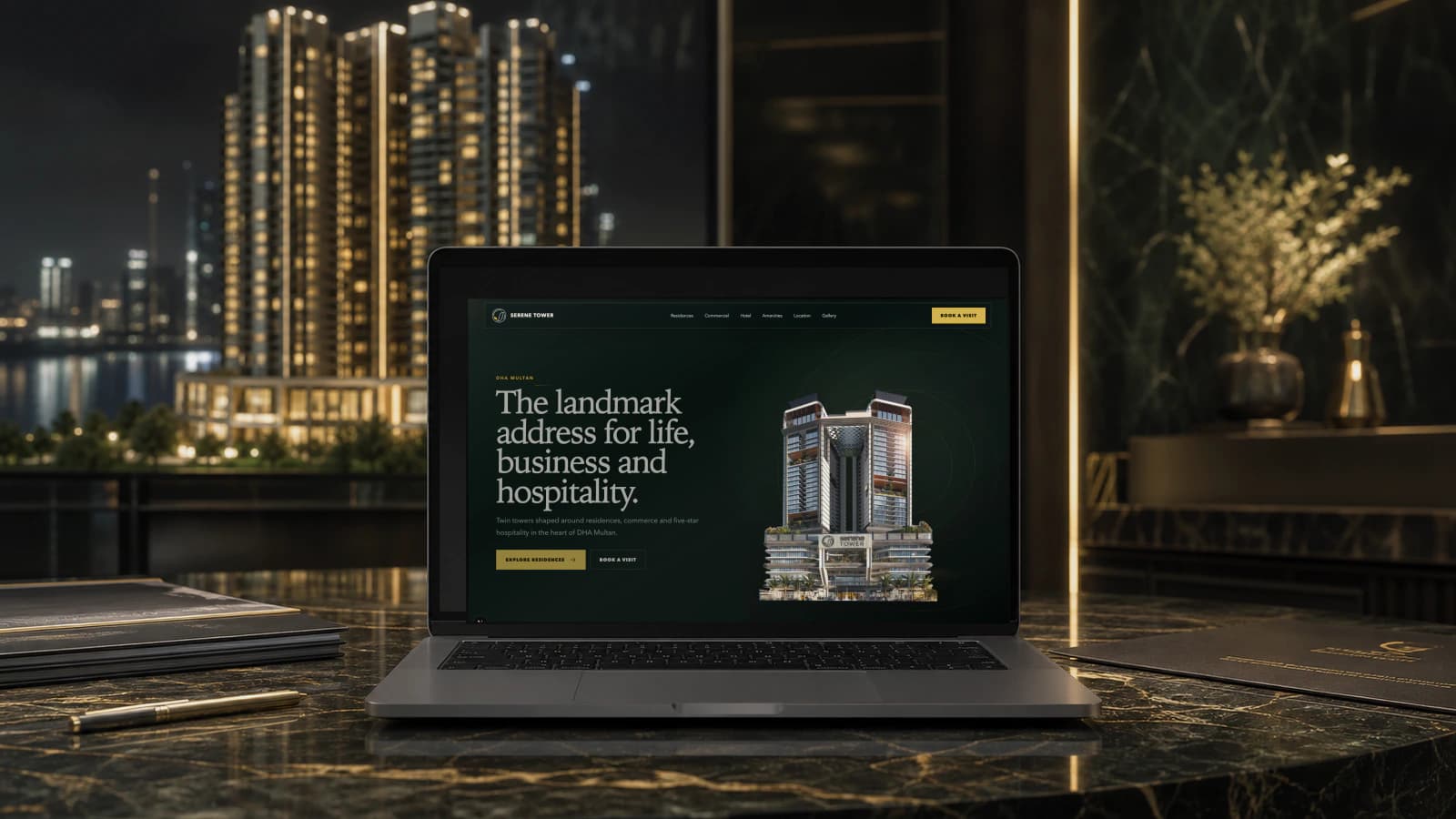
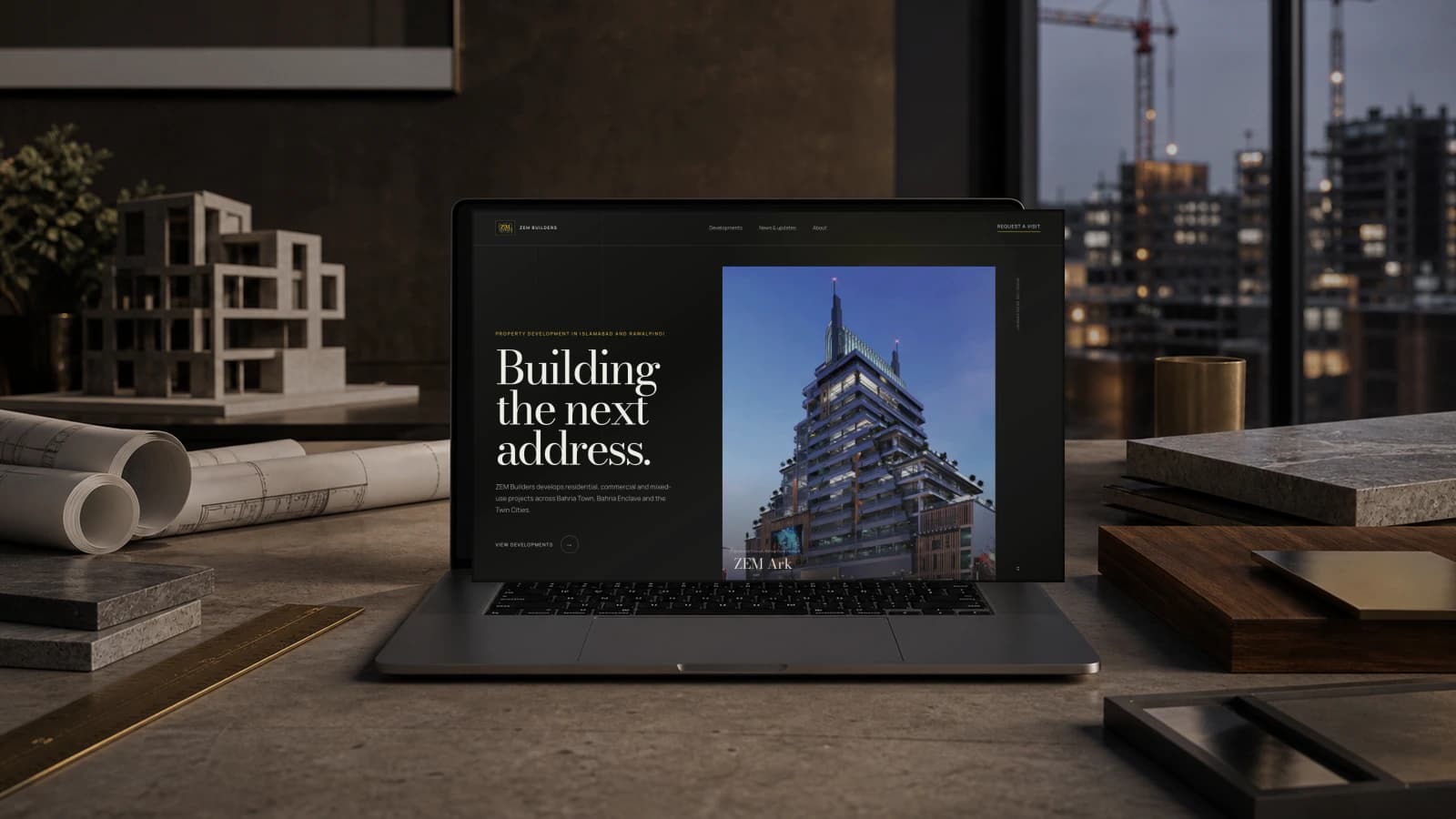
Real estate briefs carry an extra layer. Off-plan sales, and the marketing of off-plan projects, are licensed through the Real Estate General Authority's Wafi platform, and REGA runs an inquiry service for checking real estate advertisement licences. We give project pages a fixed place for those licence references, so your team can show them wherever your legal adviser says they belong. The page pattern itself we know from real estate sites for Pakistani developers, including Serene Tower and ZEM Builders: project evidence first, clear unit and development journeys, and a direct route to enquiry.
Arabic as the primary build, not a translation layer
Arabic is the Kingdom's language under Article 1 of the Basic Law of Governance, and a business selling to Saudi customers should treat its Arabic site as complete in its own right, not as a partial translation. We deliver Arabic and multilingual sites with proper right-to-left layouts: mirrored navigation and directional icons, Arabic typefaces chosen for long body text as well as headings, forms that accept Arabic input and Saudi phone numbers, and search that works in both scripts. Each language gets its own URLs and metadata so search engines can index it separately.
The language requirement reaches past the pages. ZATCA's tax invoicing guideline says the required details on a tax invoice must appear in Arabic, and an invoice without them is not a valid VAT tax invoice in the Kingdom. It allows Western or Arabic-Indic numerals, and Latin characters for names of international origin, such as brand and product names. For an online store, that shapes order confirmations, invoice templates and the product data your catalogue holds, so we plan Arabic product names and attributes at the start instead of the week before launch.
The rules a Saudi website is built around
The Personal Data Protection Law took effect on 14 September 2023, and its transition period ended on 14 September 2024. It covers the personal data of people living in the Kingdom even when the processing happens outside it. Article 12 requires a privacy policy, available before any data is collected, that states the purpose, the data collected, how it is stored and destroyed, and how people exercise their rights. Article 25 bars sending advertising by email or other personal channels without prior consent and a clear way to opt out. On a build, that means a privacy notice linked from every form, marketing consent left unticked, only the fields you actually need, and a written map of where form data goes.
The E-Commerce Law, issued in 2019, requires online stores to show their name, address, contact details and commercial registration number, and to disclose the full price, including taxes and fees, before the order is placed. Consumers can generally return unused goods within seven days, with exceptions such as custom-made items. Since March 2023 the Ministry of Commerce has asked e-store owners to register on the Saudi Business Center's Business Platform rather than the older Maroof platform. We build the footer, checkout summary and returns pages to carry each of these.
E-invoicing affects the store as well as the accounts team. Since December 2021, resident VAT taxpayers have had to issue invoices, including simplified invoices for consumer sales, through a compliant electronic solution, and ZATCA is moving businesses onto the Fatoora integration phase in waves. Wave 25, announced on 24 July 2026, covers taxpayers whose VAT-subject revenue exceeded SAR 187,500 in any year from 2022 to 2025, with integration due by 1 February 2027. Store orders need a clean handoff to that invoicing solution, and we plan the connection with your finance team. On accessibility, the Digital Government Authority audits government websites against WCAG 2.1 AA, and we build private-sector sites to the same level.
Checkout for a mada market
The national payment network, mada, was established by the Saudi Central Bank (SAMA), and banks operating in the Kingdom issue cards that work on it. It has supported online payments and Apple Pay since 2018. A Riyadh checkout should show mada as its own option rather than hiding it behind generic card logos, and offer Apple Pay on mobile. Buy-now-pay-later is an activity SAMA licenses, so we add instalment options only through a licensed provider your gateway supports, and keep VAT-inclusive totals visible at every step.
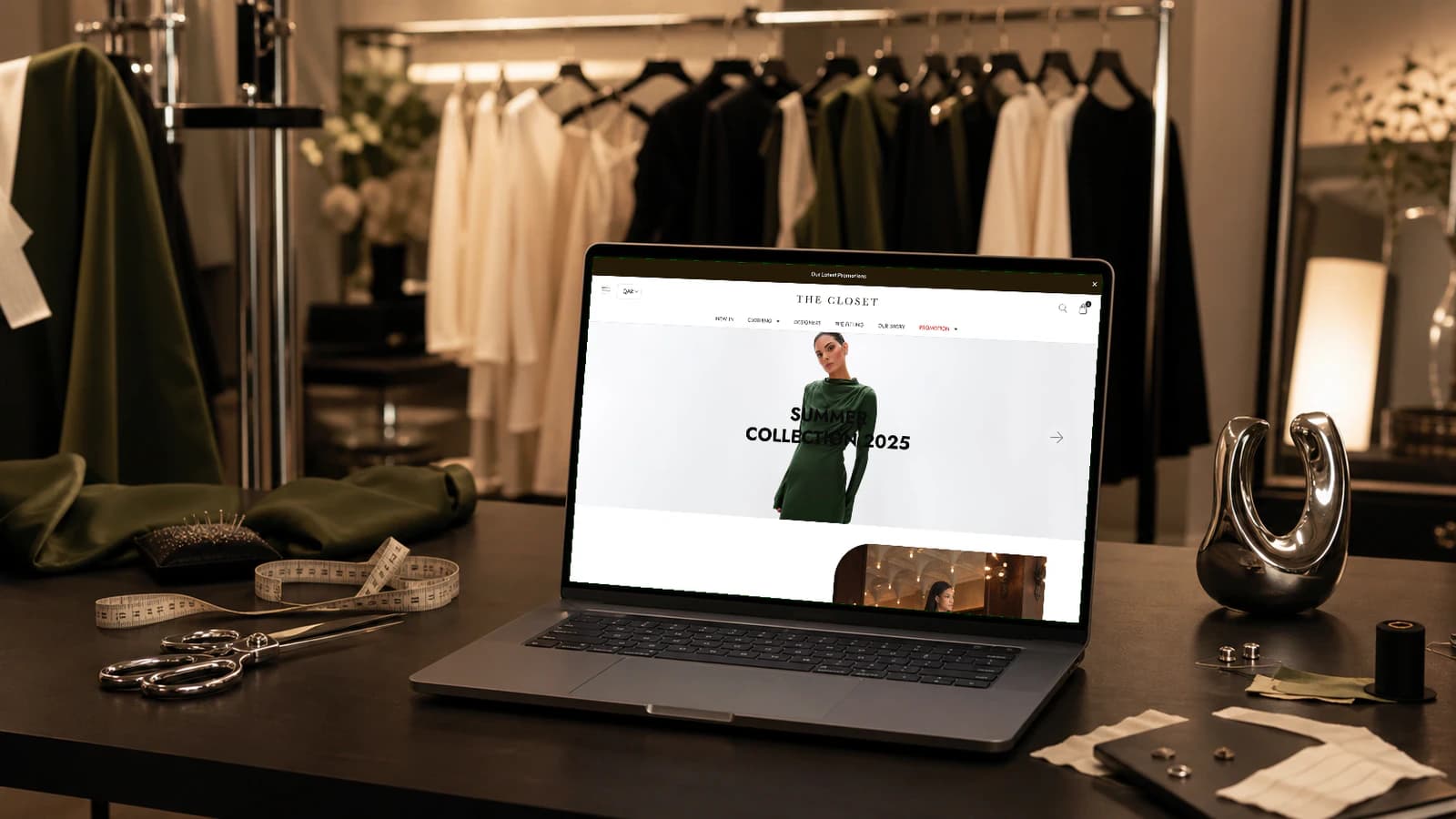
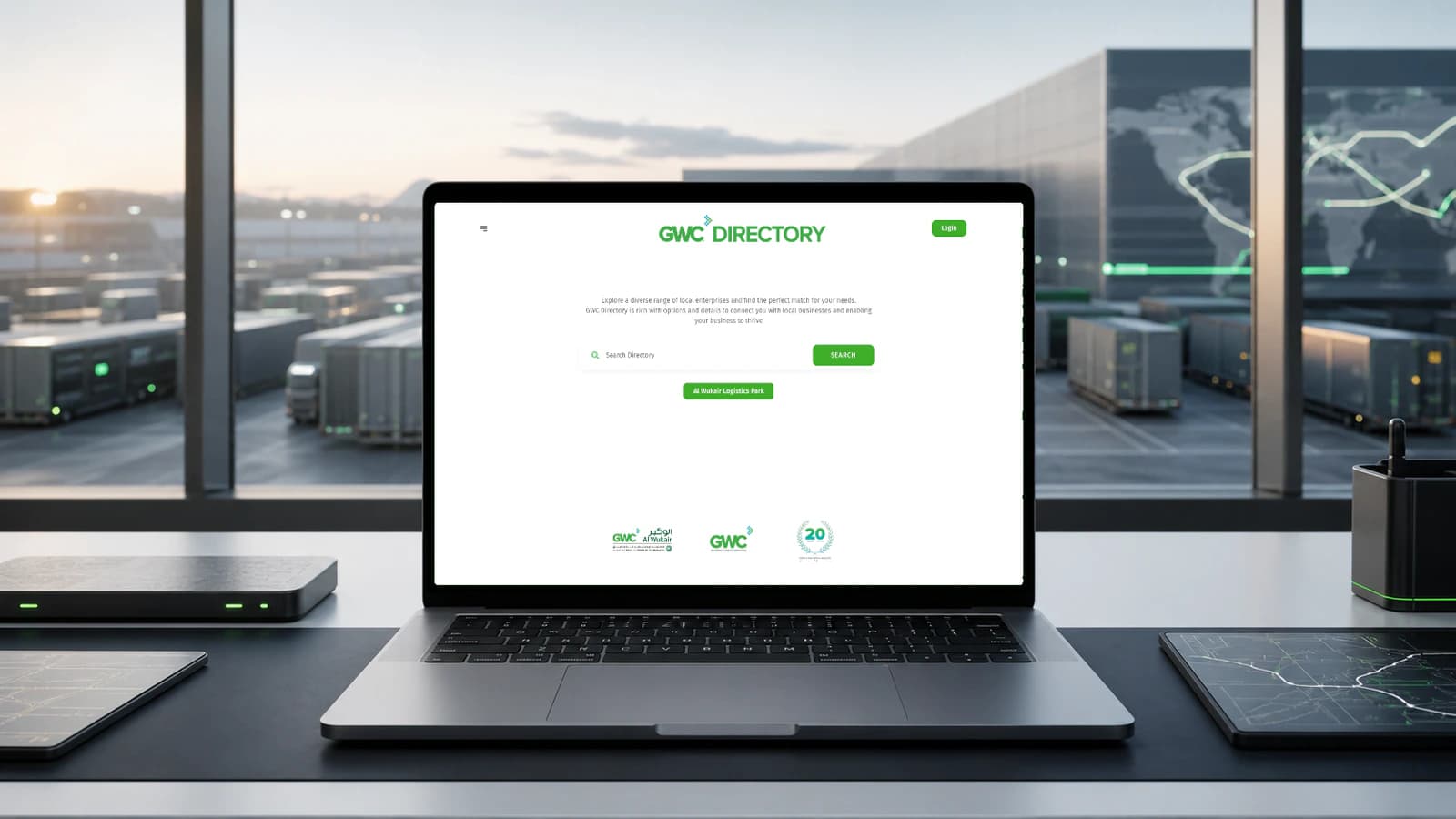
Our Gulf e-commerce reference is The Closet, a fashion store for a Qatar client, where the work centred on mobile product discovery and a short route from browsing to purchase. GWC Directory, a logistics directory platform for another Qatar client, shows how we structure a large directory of logistics organisations so it stays easy to search as listings grow. A Riyadh brief adds mada, Arabic catalogue data and Saudi disclosures to the same foundations.
Working across time zones.
Islamabad is two hours ahead of Riyadh all year, so calls and design reviews sit inside the Riyadh working day.
Riyadh runs on UTC+3 and Islamabad on UTC+5, and neither observes daylight saving time, so the gap stays at exactly two hours all year. Riyadh 09:00 to 17:00 is 11:00 to 19:00 in Islamabad: a 10:00 Riyadh review is 12:00 in Islamabad, and a 15:00 Riyadh call is 17:00. Saudi Arabia's weekly holiday is Friday and Saturday, so the Riyadh working week runs Sunday to Thursday and review days are agreed at kickoff. During Ramadan, Saudi labour law caps working hours for Muslim employees at six a day, so we fit calls into the shorter day your team keeps that month.
What a build in Riyadh needs.
Arabic-first, right-to-left delivery
Arabic is the Kingdom's official language. We deliver Arabic and multilingual sites with mirrored RTL layouts, Arabic-ready typography, forms and search that accept Arabic input, and separate URLs and metadata for each language so both versions can be indexed.
PDPL privacy notices and marketing consent
The Personal Data Protection Law applies to data about people living in Saudi Arabia, even when it is processed abroad. We link a privacy notice from every form before collection, leave marketing consent unticked with a clear opt-out, keep form fields to what you need, and document where submitted data is sent. Your adviser approves the policy text.
E-Commerce Law disclosures and store registration
Online stores must show their name, address, contact details and commercial registration number, and disclose full prices including taxes and fees before purchase. We build these into the footer, checkout summary and returns pages, and leave space for the store's Business Platform registration details from the Saudi Business Center.
ZATCA e-invoicing and Arabic invoices
Tax invoices must carry their required details in Arabic, and Fatoora integration waves now reach businesses with VAT-subject revenue above SAR 187,500. We design Arabic order confirmations and invoice templates and plan how store orders reach your ZATCA-compliant invoicing solution or ERP.
mada, Apple Pay and licensed instalments
We set up checkout with mada as a distinct payment option, Apple Pay on mobile and buy-now-pay-later only from SAMA-licensed providers your gateway supports, with VAT-inclusive totals shown throughout.
What Xsofty can build for Riyadh clients.
Web Design & Development
High-performance websites shaped around your brand, your audience, and the outcomes that matter.
- Strategy
- Next.js
- CMS
Arabic & Multilingual Websites
Right-to-left Arabic layouts and bilingual websites, planned for reading and for search in each language.
- Arabic RTL
- Bilingual
- hreflang
E-Commerce Development
Fast, frictionless storefronts that turn discovery into purchase across every screen.
- Shopify
- WooCommerce
- Conversion
Custom Web Apps & AI Integrations
Purpose-built platforms and useful AI workflows that remove friction from complex operations.
- Web apps
- Automation
- AI
SEO & Digital Growth
Search foundations, content direction, and measurable improvements designed to compound over time.
- Technical SEO
- Content
- Analytics
Website Maintenance & Care Plans
Proactive updates, monitoring, and support that keep your digital presence secure and performing.
- Support
- Security
- Performance
Who we build for in Riyadh.
Regional headquarters and professional services
Bilingual corporate sites that explain a regional remit, give procurement teams clear entity details, and run careers pages with Saudi context instead of a link to a global jobs board.
Real estate developers and brokers
Project launch sites with unit and development journeys, construction evidence, a fixed place for REGA and Wafi licence references, and enquiry capture that reaches the sales team quickly.
Retail and fashion e-commerce
Arabic-first storefronts with mada and Apple Pay, E-Commerce Law disclosures, a clear returns page, Arabic invoice templates and product data planned in both languages.
Hospitality, events and destinations
Fast bilingual booking and event sites whose content can change as project phases open and the Expo 2030 calendar approaches.
B2B distributors and logistics platforms
Searchable directories and trade catalogues, account areas, and integrations with ERP or invoicing systems so orders do not need to be re-keyed.
Relevant work
The Gulf client work we can show is three Qatar projects, The Closet, GWC Directory and BEAT; Serene Tower and ZEM Builders are real estate sites for Pakistani developers, shown for the project-site pattern rather than as Saudi work.
Questions from Riyadh clients.
No. Xsofty is based in Islamabad and works with Riyadh businesses remotely. Calls and design reviews are scheduled in Riyadh working hours, and we confirm decisions in writing after each session.
More in Saudi Arabia
Sources for this page (21)
- Most RHQs licensed under the Ministry of Investment's programme are in Riyadh; from 1 January 2024 multinational companies doing business with Saudi government entities must have their regional headquarters in the Kingdom mayerbrown.com (opens in a new tab)
- The Royal Commission for Riyadh City oversees King Salman Park, covering more than 16 square kilometres with housing, hotels, retail space and a Royal Arts Complex rcrc.gov.sa (opens in a new tab)
- Riyadh will host World Expo 2030 from 1 October 2030 to 31 March 2031 en.wikipedia.org (opens in a new tab)
- REGA's Wafi platform licenses off-plan sales and processes marketing licences for off-plan real estate projects rega.gov.sa (opens in a new tab)
- REGA runs an inquiry service for verifying real estate advertisement licences rega.gov.sa (opens in a new tab)
- Article 1 of the Basic Law of Governance names Arabic as the Kingdom's language and Riyadh as its capital en.wikisource.org (opens in a new tab)
- Tax invoices must include the required details in Arabic, and an invoice without them is not a valid VAT tax invoice; Western or Arabic-Indic numerals are accepted, and Latin characters are accepted for proper names of international origin, including product names (ZATCA guideline, version 3, May 2026, sections 4.2.1 and 9.5.1) zatca.gov.sa (opens in a new tab)
- PDPL Article 2 covers processing of personal data of Kingdom residents from outside the Kingdom; Article 12 sets the privacy policy contents; Article 25 requires prior consent and an opt-out for advertising sent by email, post or other personal means sdaia.gov.sa (opens in a new tab)
- The PDPL came into force on 14 September 2023, and its transition period ended on 14 September 2024 morganlewis.com (opens in a new tab)
- The PDPL applies to non-Saudi organisations that handle the personal data of Saudi residents clydeco.com (opens in a new tab)
- The E-Commerce Law (issued 10 July 2019) requires a store's name, address, contact methods and commercial registration number, pre-contract disclosure of total price including delivery fees and taxes, and a seven-day return right for unused goods, with exceptions such as custom-made products saudipedia.com (opens in a new tab)
- On 29 March 2023 the Ministry of Commerce asked e-store owners to register on the Saudi Business Center's Business Platform rather than Maroof mc.gov.sa (opens in a new tab)
- E-invoicing applies to all resident taxpayers; phase one (4 December 2021) requires invoices to be issued through a compliant electronic solution; phase two integration with ZATCA's systems has rolled out in waves since 1 January 2023; simplified (B2C) invoices are covered zatca.gov.sa (opens in a new tab)
- Wave 25, announced 24 July 2026, covers taxpayers whose VAT-subject revenue exceeded SAR 187,500 in 2022, 2023, 2024 or 2025, with integration with Fatoora due by 1 February 2027 zatca.gov.sa (opens in a new tab)
- The Digital Government Authority audits government websites against WCAG 2.1 AA deque.com (opens in a new tab)
- mada was established by the Saudi Central Bank; banks in the Kingdom must issue compatible cards; mada e-commerce and Apple Pay were introduced in 2018 en.wikipedia.org (opens in a new tab)
- SAMA licenses buy-now-pay-later activity (licence issued to Tabby Finance on 10 November 2025) sama.gov.sa (opens in a new tab)
- Saudi Arabia's weekly holiday is Friday and Saturday spa.gov.sa (opens in a new tab)
- Under Labor Law Article 98, Muslim workers' actual working hours during Ramadan do not exceed six hours a day or 36 hours a week hrsd.gov.sa (opens in a new tab)
- Saudi Arabia uses UTC+3 with no daylight saving time en.wikipedia.org (opens in a new tab)
- Pakistan uses UTC+5 and has not observed daylight saving time since 2009 en.wikipedia.org (opens in a new tab)